
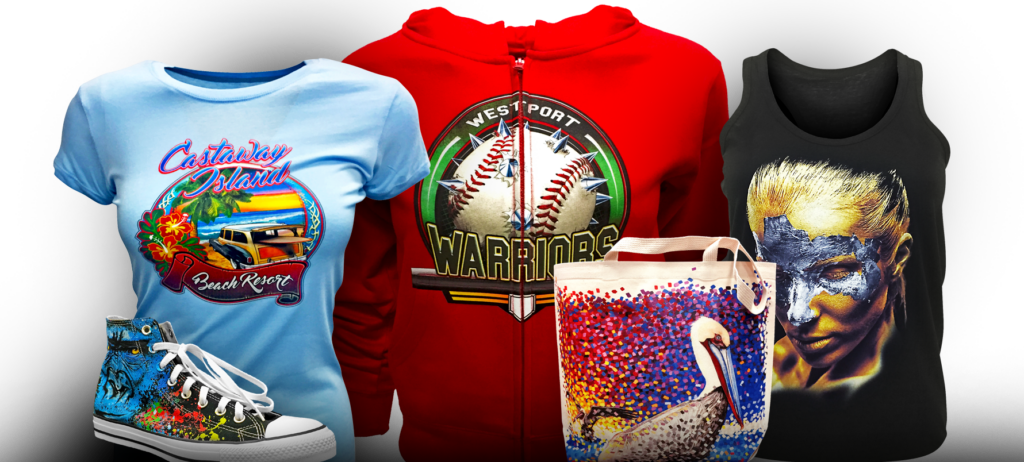
What is DTG printing and how does it work?
Direct-to-garment (DTG) printing is a cutting-edge method that uses specialized inkjet technology to print designs directly onto fabric. It’s a relatively straightforward process that delivers vibrant, detailed, and durable prints.
Unlike traditional printing methods like screen printing, DTG works more like a regular printer—but for garments. It eliminates the need for stencils or screens, making it ideal for small-batch production.
Here’s a step-by-step explanation of the DTG printing process:
Digital design preparation: The process begins with a high-resolution digital design, typically in PNG or JPEG format. Key considerations include ensuring a transparent background, proper dimensions, and high resolution (300 DPI or more).
Garment pre-treatment: Before printing, the garment is treated with a special solution that helps the water-based inks bond to the fabric. This step enhances color vibrancy and ensures the ink adheres evenly. Pre-treatment also prevents the colors from fading during washing, making it a critical part of the process.
Printing process: Once the garment is prepared, it’s placed on a flat platen within the DTG printer. The printer sprays tiny droplets of ink directly onto the fabric in layers, allowing for precise reproduction of intricate designs and gradients. Advanced printers use multiple nozzles and automated calibration to maintain consistency.
Curing the ink: After printing, the garment is heat-cured using either a heat press or conveyor dryer. This step locks the ink into the fabric, ensuring it remains bright and durable even after multiple washes. Heat curing also gives the print a smooth finish and prevents smudging.
The simplicity and efficiency of DTG printing make it a popular choice for businesses aiming to produce customized apparel quickly and cost-effectively. For instance, a small apparel brand might use DTG to launch limited-edition collections, testing designs before committing to larger production runs. Event organizers often choose DTG to produce for one-time events, ensuring quick turnaround and high-quality prints.
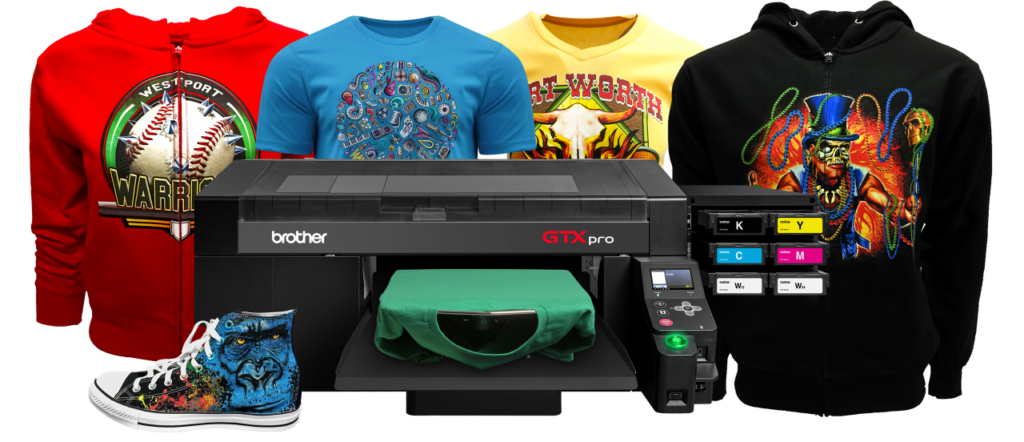
DTG printing pros:
DTG printing offers numerous advantages that make it a preferred choice for creating custom apparel. Let’s take a closer look at what sets it apart.
High-quality prints: DTG printers deliver crisp, detailed designs with vivid colors. The ink bonds directly with the fabric, ensuring a smooth and natural finish. DTG printing excels at reproducing fine details and gradients.
Unlimited color options: In contrast to screen printing, DTG does not require individual screens or setup for each color. It allows you to print full-color designs, including complex gradients and photographs, with no additional cost for multiple colors.
No minimum order requirements: Perfect for print-on-demand businesses and small-scale projects, DTG printing eliminates the need for bulk orders. You can print as few as one item without sacrificing cost-effectiveness, enabling businesses to cater to niche markets and personalized requests.
Eco-friendly: DTG inks are water-based, non-toxic, and eco-friendly. The lack of screens or excessive waste also makes DTG a sustainable option for businesses focused on reducing their ecological footprint.
Fast production times: As a form of digital printing, DTG has minimal setup and production time. This makes it ideal for meeting tight deadlines or producing last-minute orders (e.g. for events or campaigns).
Soft and durable prints: Unlike heat transfers, DTG prints are absorbed into the fabric, resulting in a soft-to-the-touch finish. The curing process ensures the designs are durable and remain resilient through regular washing without fading or cracking.
Versatility across designs and fabrics: While cotton remains the primary choice, DTG technology can handle various fabric types and blends, making it a good choice for diverse product lines.